Baking soda and vinegar can loosen a light film of soap and grease and freshen a drain, but they will not clear a solid clog such as hair, wipes or roots. The fizzing reaction is mild and mostly water.
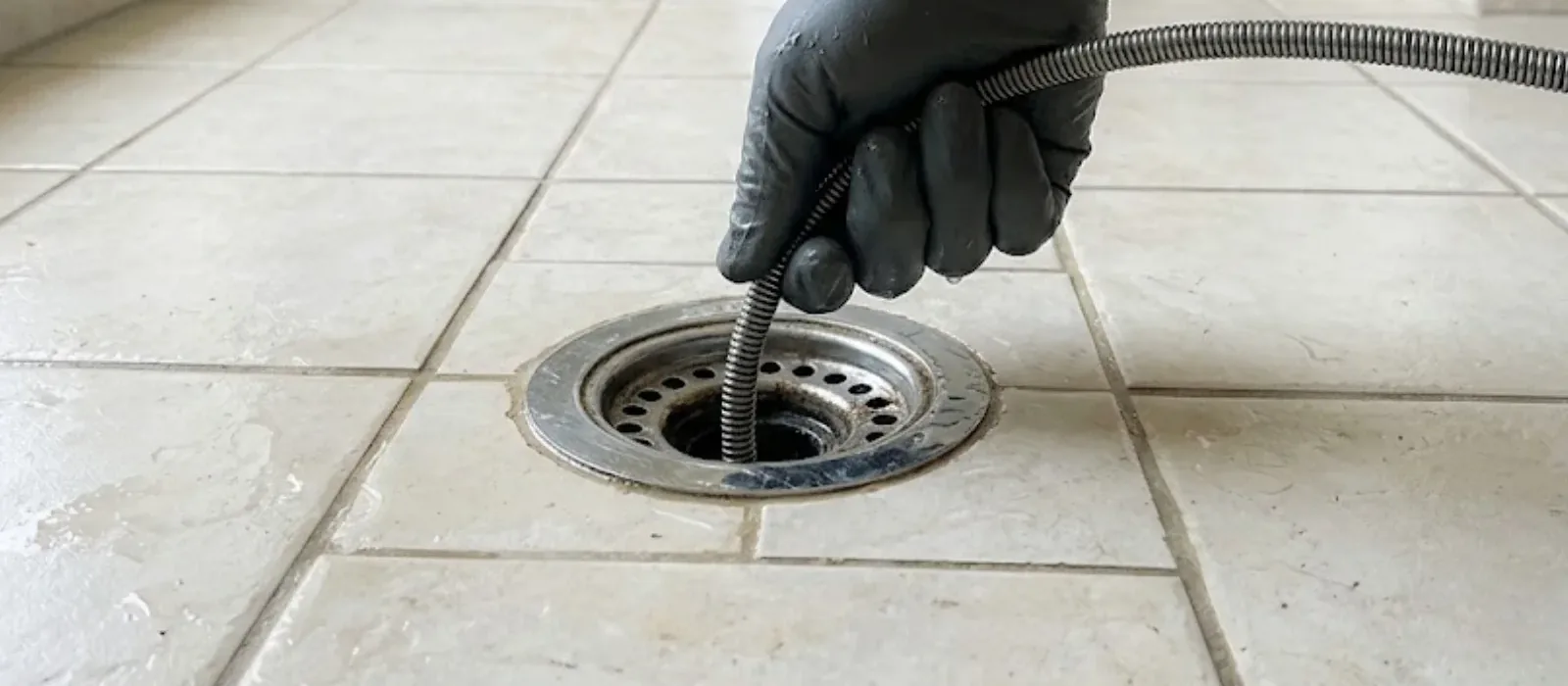
If water drains slowly, try a plunger or a drain snake first. Avoid chemical drain openers, especially in old cast iron pipes or standing water. If several fixtures back up, stop and call a plumber.
What the Fizz Actually Does
Baking soda is a mild base and vinegar is a mild acid. Together they fizz, then leave mostly salty water. The bubbling can knock loose a thin layer of soap scum and grease on the pipe wall, which is why a drain smells fresher afterward.
It does not dissolve a hair clog, a toothpick wad, a wet wipe or a root. The reaction is brief and does not reach far down the line. Think of it as light maintenance, not repair.
The Right Way to Try It
If you want to try it on a slow sink, use this method. It is safe for most household pipes and fixtures.
- Clear standing water. Bail out the sink or tub so the mixture can reach the pipe.
- Pour in baking soda. About half a cup down the drain, pushed in with a spoon.
- Add vinegar. Pour in about a cup of white vinegar and cover the opening with a stopper or wet cloth for a few minutes.
- Flush with hot tap water. Not boiling. Boiling water can soften plastic pipe joints and crack a cold porcelain bowl.
- Plunge or snake if it is still slow. A plain plunger is the next step, not more chemicals.
If it works once and the drain slows again in a week or two, the clog is still there and the pipe is narrowing. Repeating the recipe will not fix it.
What Works for Which Clog
Match the clog type to the tool. This is the quick version of what we reach for first.
| Clog type | Baking soda and vinegar | Better choice |
|---|---|---|
| Soap film and light grease. | Sometimes helps | Hot tap water flush, regular maintenance. |
| Hair in a tub or shower. | No | Plunger, drain snake or a hair catcher. |
| Wipes or paper towels in a toilet. | No | Plunger, closet auger or a plumber. |
| Cooking grease in a kitchen line. | Little effect | Cable machine or hydro jetting. |
| Roots in an outside line. | No | Camera and jetting or cutting. |
| Several fixtures backing up. | No | Call a plumber, main line problem. |
Why Chemical Drain Cleaners Are the Bigger Risk
Store-bought openers are strong acids or lye. They work by heat and corrosion, and they can sit in a standing pool and eat at old pipe, plastic fittings and the finish on tub drains. If the clog does not clear, you now have a pipe full of caustic water.
That is a danger for whoever opens the trap next. A plumber who cables a drain full of chemical can get a splash burn. Never mix cleaners, and never pour one on top of another, because gases can form. If you already used a product, tell the plumber what it was and when you poured it.
Gloves and eye protection are the minimum if you must use one. Do not use a plunger on a drain with chemical sitting in it, because it can spray back.