First decide where the water comes from. Water seeping through walls or the floor slab is a groundwater and drainage issue. Water rising from a floor drain is a sewer backup. Water from a pipe is a plumbing leak. Each has a different fix.
For now, keep out of standing water near outlets, move belongings up, photograph everything and check the sump pump. A plumber handles pumps, drains and pipes. A waterproofer handles walls and exterior drainage.
Where Is the Water Coming From?
Spend a few minutes looking at how and where the water appears. This tells you who to call.
| What you see | Likely source | Who usually handles it |
|---|---|---|
| Damp stain or trickle on a wall. | Groundwater pressure, cracks, gutters or grading. | Waterproofing contractor, plumber for the sump. |
| Water at the wall and floor joint. | Groundwater rising along the footing. | Waterproofer or plumber with a drain and sump. |
| Water rising from a floor drain. | Sewer backup | Plumber, and the sewer authority if street-wide. |
| Spraying or dripping pipe. | Plumbing leak | Plumber. |
| Sump pit full, pump quiet. | Pump failure or power loss. | Plumber. |
What to Do While It Is Happening
Safety comes first. These steps protect people and your claim.
- Stay away from standing water. Electric panels, outlets and appliances can make water dangerous. If water is near them, do not enter. Call the utility or an electrician.
- Check the sump pump. If you have one, make sure it has power and the float moves freely. If it is not running, do not stand in water to fix it.
- Move belongings up. Lift items off the floor only if it is safe.
- Photograph and video. Take timestamped photos of water level, damage and the source.
- Do not mix cleanup chemicals. Bleach and other products can create dangerous fumes.
- Document, then call your insurer. Photograph the damage first, start emergency steps to limit it, then ask what your policy covers.
Flood damage and sewer backup may be excluded or limited unless you have added coverage. Ask your insurer about both. Standard homeowners insurance usually does not cover flood.
Plumber or Waterproofer: A Plain Division of Work
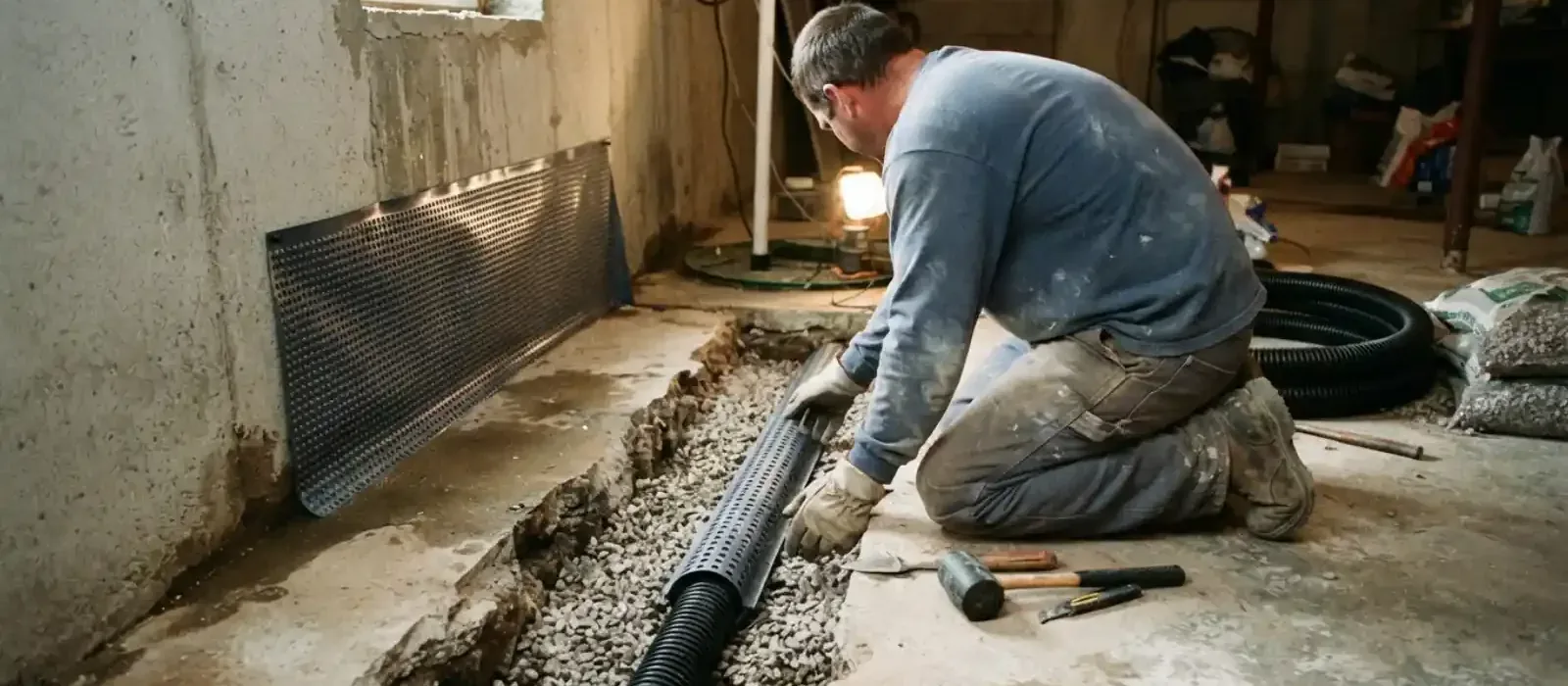
A plumber works on the sump pump, discharge piping, interior drain connections, floor drains, sewer backups and supply leaks. A waterproofing contractor usually works on foundation walls, exterior grading, membrane and the excavation side of the job.
Many wet basements need both. A pump with no way to get water to it does little, and a new drain with a dead pump does little too. We do the plumbing side, including sump pump work, and we will tell you honestly when the answer is exterior drainage that we do not do. Our basement waterproofing page describes the plumbing-related part.
Cheap Fixes to Check Before You Call
Some leaks have simple causes. These checks cost little and take little time.
- Gutters and downspouts. Clogged gutters spill water at the foundation. Extend downspouts several feet away.
- Grading. Soil should slope away from the house, not toward it.
- Window wells. Clear leaves and check the drain at the bottom.
- Cracks. Note their width and whether they grow after storms.
- Sump discharge. Make sure the discharge line is not frozen, kinked or dumping beside the foundation.
Fixing gutters and grading does not solve everything, but it reduces the volume that your pump and walls must handle.