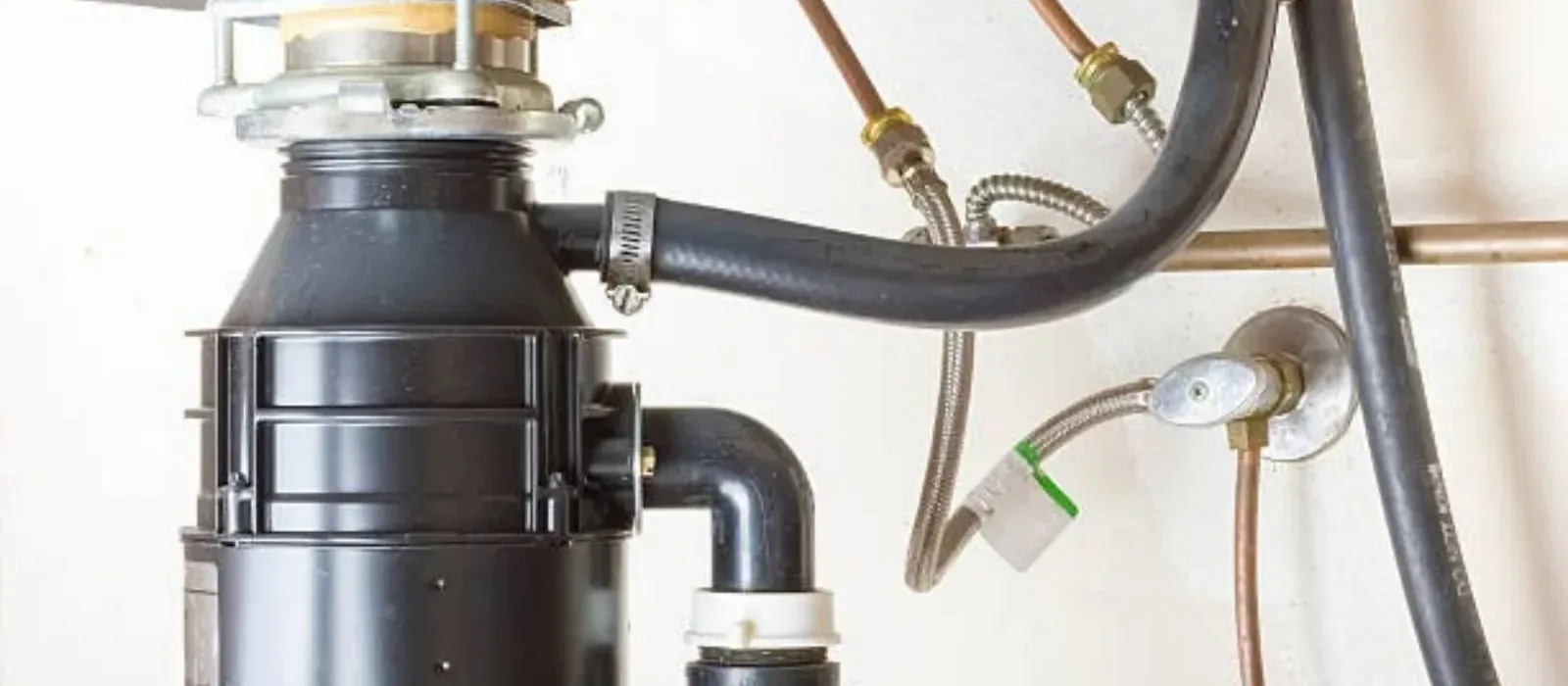
A humming disposal almost always means the motor has power but the grinding plate is stuck. Switch it off at the wall, then use a hex wrench in the socket under the unit to rock the plate free. Press the red reset button on the bottom.
If it stays silent with no hum at all, the cause is usually a tripped reset button or a dead outlet. Never put your hand or fingers inside, even with the switch off. Use tongs or pliers to remove anything you can see.
Humming, Jammed or Dead: Which One Do You Have?
The sound tells you most of what you need. Match what you hear to the row below before you touch anything, because each problem has a different first step.
| What you notice | Most likely cause | First safe step |
|---|---|---|
| A steady hum, nothing spins. | Jammed grinding plate. | Switch off, then free the plate with a hex wrench from underneath. |
| A hum, then silence after a few seconds. | Motor overheated and the thermal overload tripped. | Wait, clear the jam, then press the red reset button. |
| No sound at all. | Tripped reset button, tripped breaker or dead outlet. | Press reset, check the breaker, test the outlet with a lamp. |
| Spins but water leaks underneath. | Worn seal or loose drain connection. | Switch off and call, do not keep running it. |
| Spins freely but sink drains slowly. | Clog past the disposal, not the unit itself. | Stop using it and see the drain section below. |
How to Clear a Jam Safely, Step by Step
This is the order we would follow in a customer kitchen. The most important rule comes first and applies to every step after it.
- Cut the power. Turn off the wall switch. If the disposal is plugged in under the sink, unplug it. If it is hardwired, turn off its breaker. A wall switch alone is not enough when you are working near the blades.
- Look first, with a flashlight. Shine a light down the drain. A bottle cap, a fruit pit, a piece of silverware or a clump of bone often shows right away.
- Remove what you see with tools. Use long tongs or needle-nose pliers. Never use your fingers, even with the power off. The plate can still move when you shift a jammed item.
- Rock the plate with a hex wrench. Most disposals have a socket in the center of the underside that takes a 1/4 inch hex (Allen) wrench. Work it back and forth until the plate turns freely a full rotation.
- Press the red reset button. It sits on the bottom of the unit. Wait about ten minutes after a long hum so the motor can cool, then press it firmly until it clicks.
- Restore power and test with water. Run cold water, switch the disposal on for a few seconds and listen. If it hums again, switch it off and stop.
If the jam clears and the unit spins, run cold water for a full minute afterward. That flushes loosened material through the drain instead of leaving it to settle in the trap.
Why Hands Never Go Down the Drain
People get hurt when they reach in "just to grab" a bottle cap. A jammed plate stores tension, and a small shift can spin it. The wall switch can also be bumped by a child or a cleaner while your hand is below.
A cut hand is a bigger bill than any repair. If tongs cannot reach the item and the hex wrench will not free it, stop there. That is a clean point to call a plumber rather than escalate.
When Reset and Wrench Do Not Fix It
Some disposals are simply finished. A motor that trips the reset button again and again after the jam is cleared is usually worn. A cracked housing that drips from the sides cannot be sealed with tape or putty.
A disposal that has been rusted through at the bottom, or one with a leak from the shaft seal, needs replacement, not a patch. Our garbage disposal repair visits usually come down to this decision: repair a loose connection, or replace the unit when the motor or housing has failed.
If you want to see what a swap involves, the work is a like-for-like fixture change, but it also touches the drain trap and sometimes the dishwasher hose. Ask the Linden Construction Code Department whether your situation needs notice or a permit before you start.