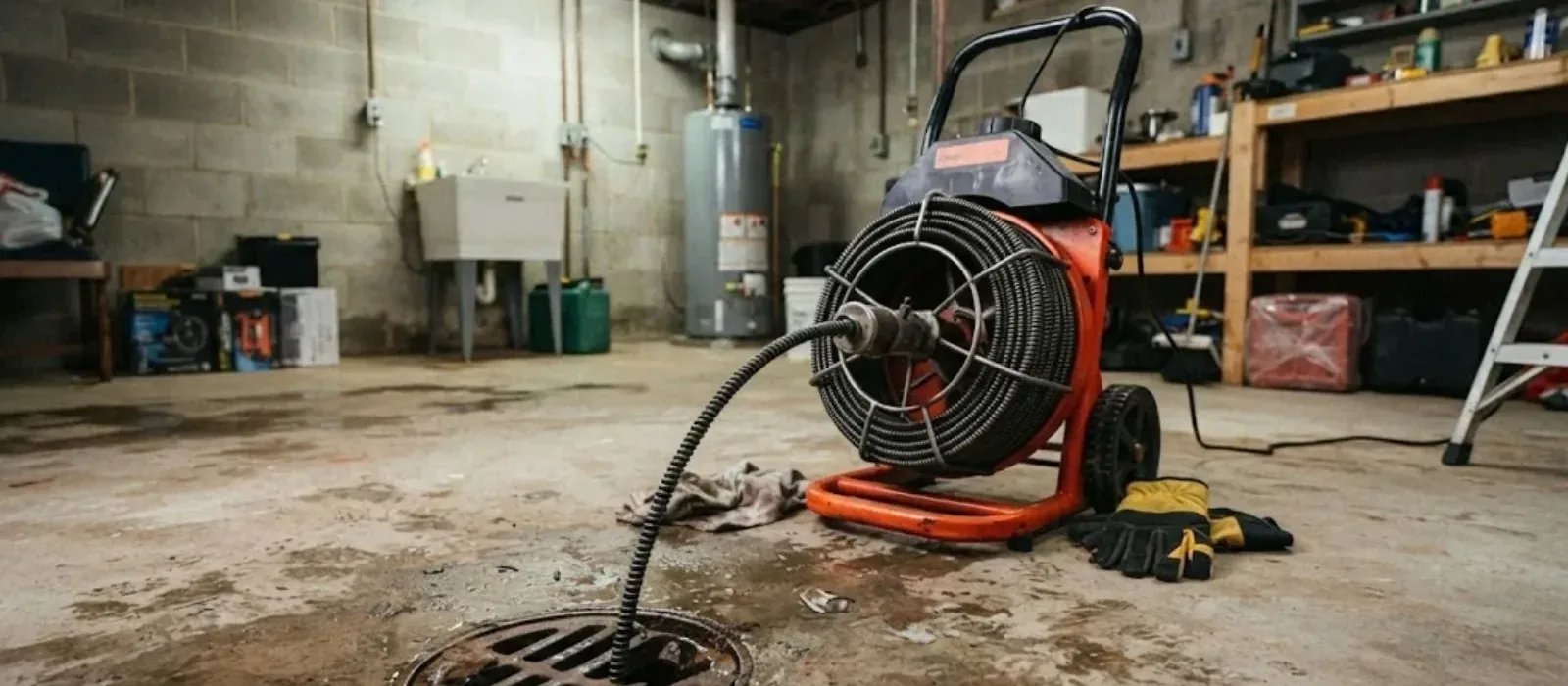
A gurgling drain means air is being pulled through water in a trap because the pipe cannot move air or water normally. The cause is either a blocked plumbing vent on the roof side or a partial blockage in the main drain below.
One fixture gurgling points to a branch clog or a local vent problem. Several fixtures gurgling, a toilet that bubbles when the washer drains, or a smell near a basement floor drain points to the main line. Stop using water if it is backing up.
What the gurgle actually is
Every sink, tub and toilet drains through a U-shaped trap that holds a plug of water. That water seal keeps sewer air out of the room. A drain pipe also needs a vent, a pipe that runs up through the roof, so air can enter behind the flowing water.
When the air cannot get in, the draining water drags air through the nearest trap instead. You hear the gulp, and sometimes the trap loses its seal. That lost seal is how a sewer smell reaches a bathroom that looked fine yesterday.
Vent problem or main line: how to tell
Use this as a first sort. It is not a diagnosis, but the pattern of what you notice narrows things quickly.
| What you notice | Points toward a vent | Points toward the main line |
|---|---|---|
| Which fixtures act up. | One or two, often the same floor. | Several at once, often the lowest ones first. |
| When it happens. | While a single fixture drains. | When the washer, shower or a flush runs. |
| Water level in the toilet. | Dips or bobs after a flush. | Rises or bubbles when another fixture drains. |
| Basement floor drain. | Quiet, maybe a faint smell. | Gurgles, smells strongly or shows water. |
| Season or weather. | Worse after leaves, nests or heavy snow on the roof. | Worse after heavy rain or after a long dry spell with roots. |
A simple test sequence you can do yourself
These checks use only water and your eyes. Do them in order and write down what happens, because the notes help whoever diagnoses it.
- Run each fixture alone. Fill a sink halfway and let it drain, then flush each toilet once. Note which ones gurgle and which stay quiet.
- Run two at once. Drain the tub while flushing the toilet nearest it. A toilet that bubbles during a tub drain suggests a shared line is restricted.
- Check the lowest drain. Look at a basement floor drain with a flashlight. Standing water, debris or a bubbling sound is a main line warning.
- Smell the trap. A rarely used sink or floor drain may only be dry. Pour a quart of water down it and see whether the smell fades.
- Look outside. From the ground, check that the roof vent stack is not visibly capped by a nest or covered by debris. Never climb up to look.
If the smell fades after you refill a dry trap, you probably had no blockage at all. If it returns within a day, something is pulling the seal out again.
Reading the sewer smell correctly
Sewer gas smells like rotten eggs, and so does natural gas, because gas utilities add that odor on purpose. If you smell it strongly and cannot tie it to a drain, treat it as a gas leak first. Leave the building, avoid switches and flames, and call your gas utility or 911 from outside.
A faint musty smell that comes and goes at one drain is usually a dry trap or a fixture seal. A steady smell in the basement, especially with gurgling, suggests the main line or a cracked pipe below the floor.
Why a blocked vent is more common than people think
Vents are open pipes on a roof, so they collect leaf litter, bird nests and in winter a cap of ice or snow. A partly blocked vent produces slow drains and gurgling that is worse during heavy use.
Cleaning a roof vent is roof work, which is where many homeowners get hurt. We can run a camera or a cable from the roof opening and tell you whether the obstruction is in the vent or in the drain. If the drain turns out to be the problem, our drain cleaning work reaches it from a cleanout.