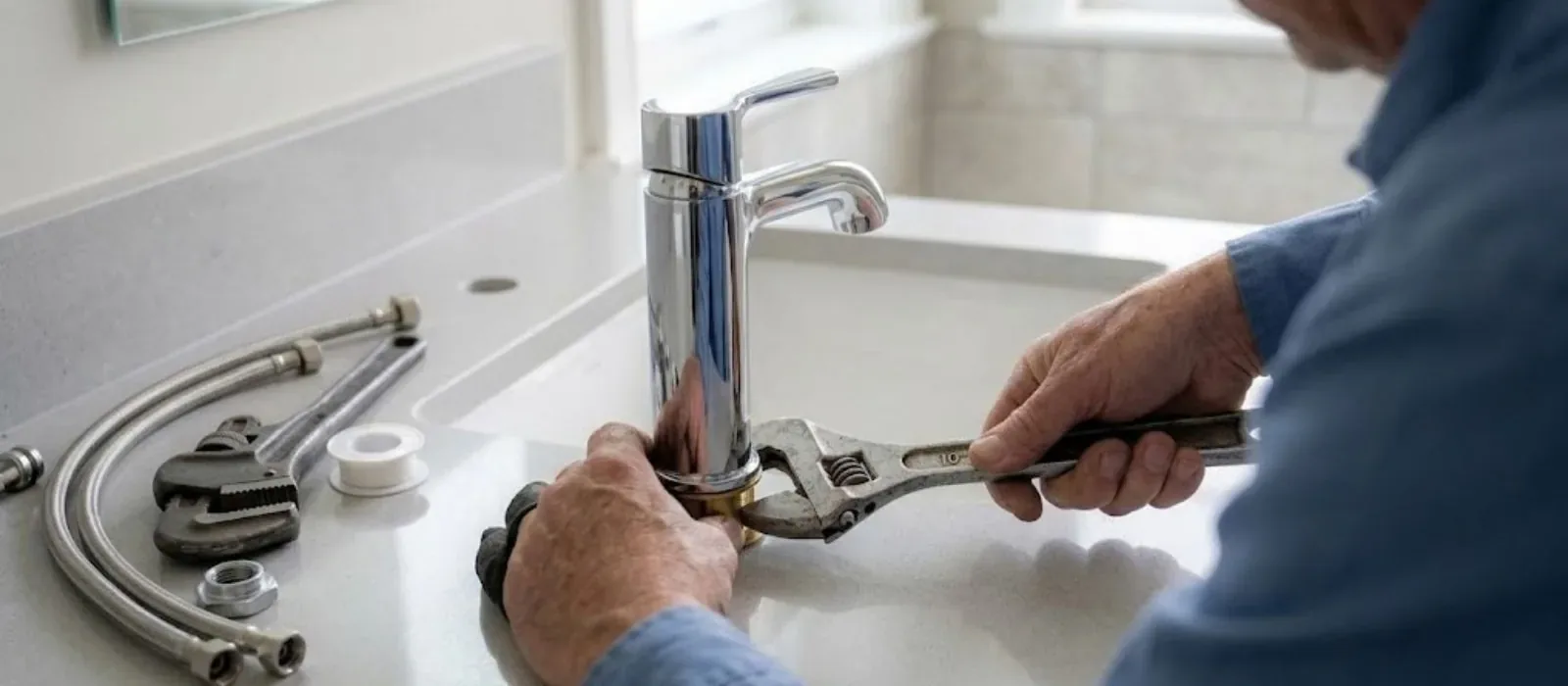
A dripping tub faucet usually has a worn cartridge, washer or seat inside the valve. First shut off the water at the fixture stops if you have them, or at the main shutoff. Then identify the type of faucet, since a single handle uses a cartridge and an older two handle style uses washers.
If water leaks behind the wall, stains a ceiling below, or the valve will not shut off, stop and call a plumber.
Where the water is coming from tells you the part
Drips from the spout when the handle is off mean the valve is not sealing. A drip around the handle base means a worn stem seal or O-ring. Water from the shower head after you turn the tub on usually means a diverter issue.
Water that appears outside the tub, such as a stain on a ceiling below or damp drywall, points to a leak in the pipe or valve body behind the wall.
Cartridge or washer: which one do you have
The look of the handle gives the first clue.
| Faucet style | Inside | Typical failure | Usual fix |
|---|---|---|---|
| Single lever or knob. | Cartridge | Worn seals, mineral buildup. | Replace the cartridge. |
| Two separate handles, older. | Compression washer and seat. | Hardened washer, scored seat. | Replace washer, sometimes the seat. |
| Two handles, newer. | Ceramic disc cartridge. | Cracked disc or seals. | Replace the cartridge. |
| Spout with a pull-up knob. | Diverter | Worn gasket or stuck plunger. | Replace the diverter or spout. |
Shut the water off first
Do this before you touch a screw.
- Look for fixture stops. Some tubs have small shutoffs behind an access panel. Turn them clockwise.
- Otherwise use the main shutoff. It is often in the basement near the water meter. Know where it is before you need it.
- Open the tub tap to drain pressure. Water stops and the line empties.
- Plug the drain. A dropped screw or clip should not vanish down the drain.
If no valve will close all the way, stop. A shutoff that will not hold means you need a plumber and possibly a new valve.
Replacing a cartridge
This applies to most single handle valves. Take a photo at each step.
- Remove the handle. Pop the cap, take out the screw, and pull the handle off.
- Remove the trim plate. Look for a retaining clip or nut that holds the cartridge.
- Pull the cartridge straight out. Some need a puller. Note the orientation of the hot and cold marks.
- Match the new cartridge exactly. Bring the old one to the supply house or send a clear photo.
- Reassemble, then turn the water back on slowly. Check for drips at the spout and the handle.
Replacing washers in an older two handle valve
Remove the handle and the packing nut, then pull the stem. The washer sits at the end, held by a small screw. Replace it with a matching one and inspect the brass seat inside the valve.
If the seat is rough, a new washer will drip again. A seat dressing tool or a new valve is the next step. This is the point many owners stop and call for faucet repair, since a worn seat needs the right tool.