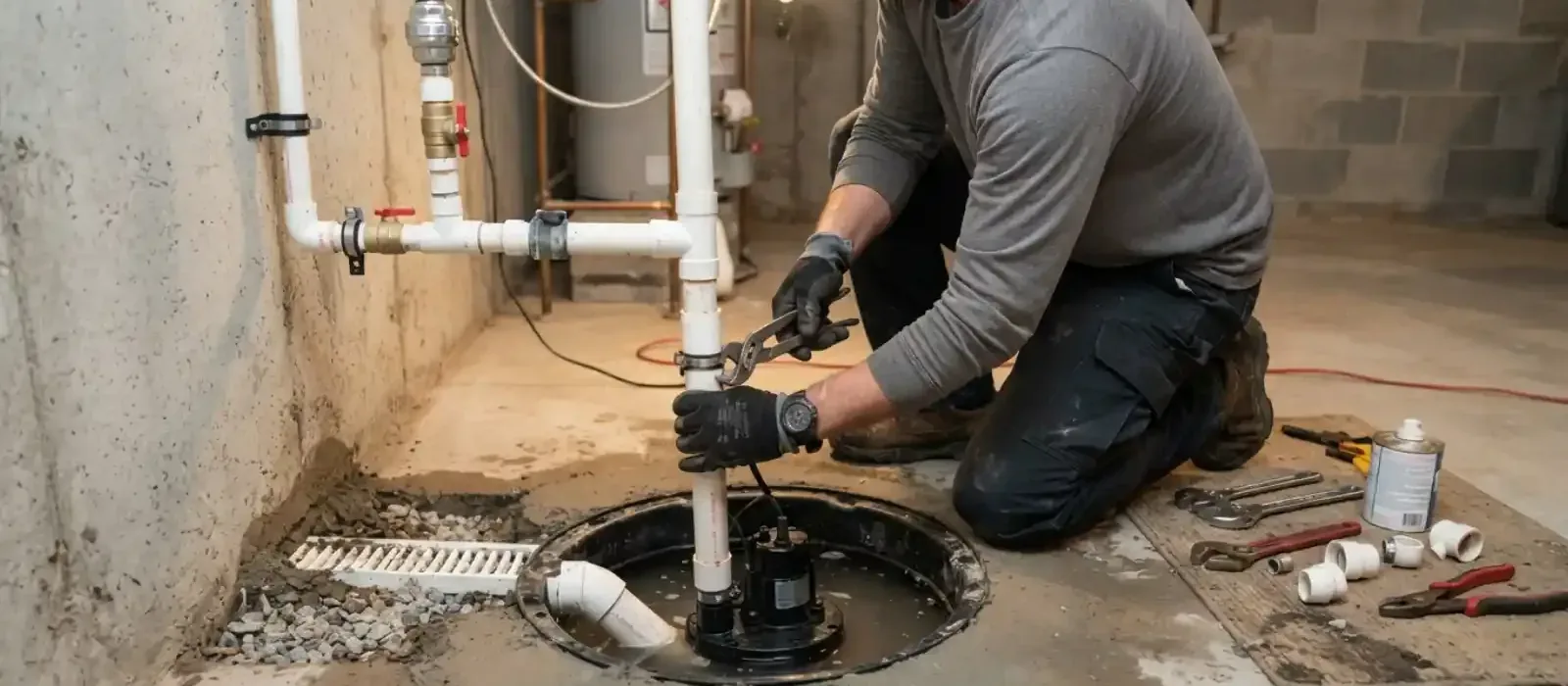
Sump pump replacement cost depends on the pump type and power, whether the basin and check valve also need work, how easy the discharge line is to reach and whether you add a battery backup. A plain swap is the lowest end, and a new basin and backup raise it.
We do not guess numbers in an article. Call us with the pump age, basin size and where it discharges, and we will give a clear price before work starts.
The Main Cost Factors at a Glance
These are the items that move a replacement quote up or down. We list them without numbers because the real figure depends on your basement.
| Factor | What changes | Effect on the job |
|---|---|---|
| Pump type | Submersible or pedestal, and horsepower. | A stronger or sturdier pump costs more. |
| Basin condition | Cracked, undersized or missing lid. | A new basin means digging and more labor. |
| Check valve and fittings. | Worn valve, corroded piping. | Replacing them adds parts and time. |
| Discharge line | Length, route, freezing exposure. | A long or buried line takes more work. |
| Battery backup | Battery size, charger, alarm. | Adds a second pump system and parts. |
| Access | Tight stairs, finished basement. | Slower work raises labor. |
Pump Type and Power
A submersible pump sits in the basin, runs quieter and handles solids better. A pedestal pump has its motor above the basin, is easier to service and is usually less expensive up front but louder.
Size matters too. A pump that is too small keeps up in a drizzle and fails in a storm. One that is too large can short cycle, which wears the motor. We match the pump to the water coming in, the vertical lift to the discharge point and the basin size, and we do not recommend the largest one by default.
Signs Your Sump Pump Needs Replacing
A sump pump often fails on the day you need it most. These warnings show up first.
- Age. Many pumps wear out after several years of hard use. If you do not know when yours was installed, assume it is aging.
- Strange noise. Rattling, grinding or a motor that hums without pumping.
- Constant cycling. On and off every few seconds can mean a stuck float or a failing check valve.
- Rust and sediment. Corrosion on the housing or grit in the basin.
- Not running during heavy rain. If water rises and the pump stays quiet, it is time to act.
Test it every few months. Pour a bucket of water into the basin and make sure the pump starts, empties it and shuts off.
Battery Backup: Why It Matters More Than the Pump
Storms that flood basements often knock out power, which is exactly when an electric pump stops. A battery backup keeps pumping for a limited time, depending on the battery and how much water is coming in.
It adds to the price, but it is the part that protects a finished basement during an outage. Ask how long the backup will run at your pumping rate, and plan to check and replace the battery on a regular schedule. See our sump pump repair and replacement page for what we handle.