To reset a tankless water heater, turn off power at the unit or breaker, wait a minute, then restore power and run a hot tap. Check that the gas valve and both water valves are open and nothing blocks the vent or condensate drain.
Error codes differ by brand, so read your manual for the exact meaning. If the same code returns after one reset, or you smell gas, stop. Repeated resets can hide a safety fault.
What a reset does and does not do
A reset clears a lockout from a controller. It is like restarting a router. It helps when the cause was a brief glitch, a power dip or a one-time ignition failure.
It does not fix a clogged heat exchanger, a failing igniter or a blocked vent. Those come back, and the unit will display the same code again. Treat a returning code as information, not a nuisance.
The safe reset sequence
Follow these in order. Stop at any point where something looks wrong.
- Look at the code. Write it down before you touch anything. The number helps whoever diagnoses it.
- Close any open hot taps. A running tap while you restart can confuse the flow sensor.
- Cut power. Switch off the unit or unplug it if it is cord connected. Wait at least a minute.
- Check the valves. The gas valve handle should align with the pipe, and the cold inlet and hot outlet isolation valves should be fully open.
- Check outside the unit. Make sure the exhaust and intake terminations are clear of snow, leaves or nests.
- Restore power. Turn it back on and open one hot tap. Watch the display for a normal start.
If it fires and runs normally, you are done. If not, do not repeat the sequence more than once.
Common causes behind error codes
Code numbers vary by manufacturer. The causes below are the ones that show up again and again.
| Type of fault | What it often means | What you can safely check |
|---|---|---|
| Ignition failure | No gas, air in the line, dirty igniter or flame sensor. | Gas valve open, other gas appliances working. |
| Flow or low flow. | Closed valve, clogged inlet filter, scale in the heat exchanger. | Valves open, a clean inlet filter if the manual shows it. |
| Vent or exhaust fault. | Blocked termination, loose vent joint, condensation. | Clear outside openings, never modify the vent. |
| Overheat | Scale, low flow or a failing sensor. | Let it cool, then check flow. |
| Condensate fault | Blocked drain line or full neutralizer. | Look for a kinked or clogged drain line. |
| Power or board fault. | Loose connection, surge, failing board. | Outlet and breaker only. |
Why flushing is part of reset advice
Minerals in water leave scale inside the heat exchanger. Scale narrows the passages, cuts flow and makes the unit overheat, which is why many error codes trace back to it. Flushing with a pump and a descaling solution that the manufacturer allows removes that scale.
How often you need to flush depends on how hard your water is, and hardness varies by water system and source. Read your water utility report, then follow the interval in your manual. If the report does not list hardness, ask the utility directly.
What flushing involves
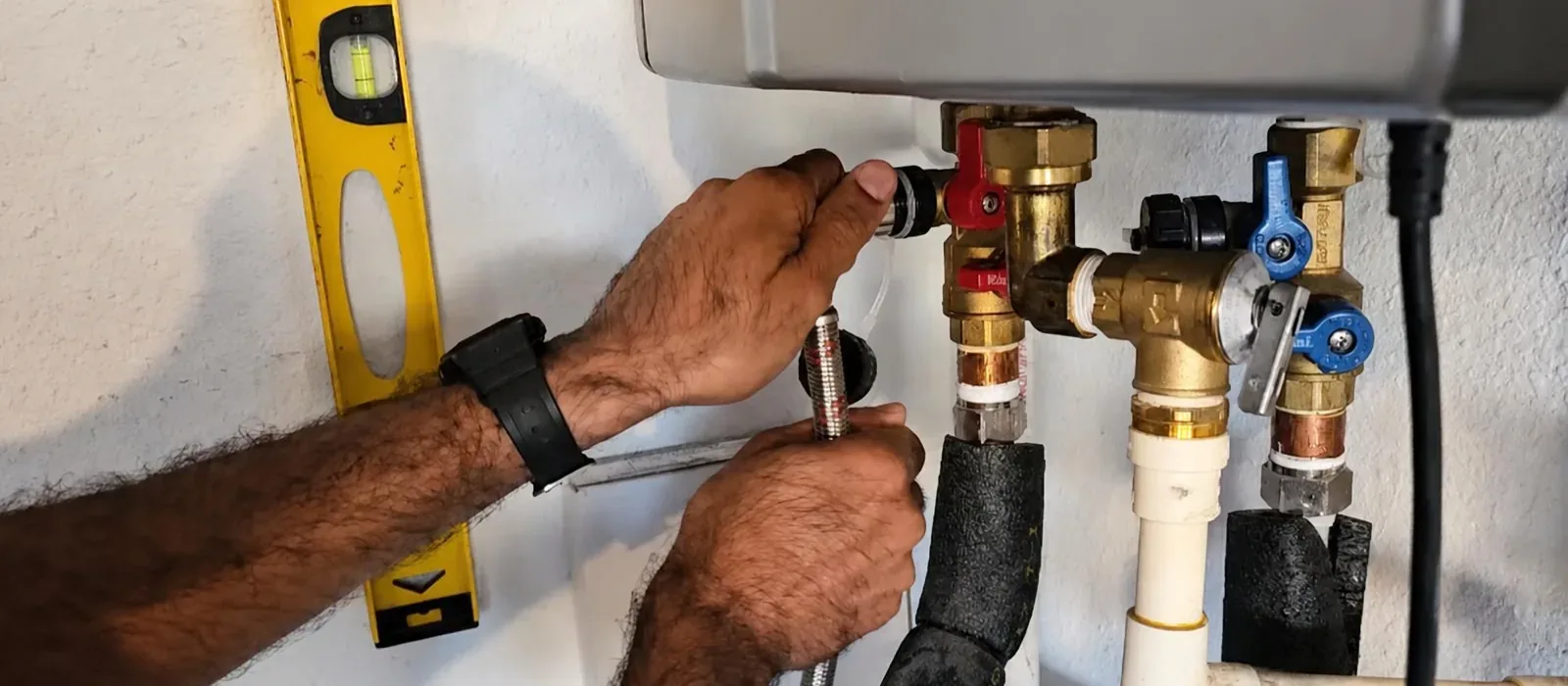
Many manuals show this with isolation valves. If your unit does not have them, a plumber can add them.
- Shut off gas and power, then close the hot and cold isolation valves.
- Connect hoses to the service ports and run descaling solution through a small pump.
- Rinse with clean water before reopening the valves.
- Clean the inlet filter, restore power and gas, and test the unit.
Flushing needs hoses, a pump and chemical handling. Many homeowners prefer to have it done once and then repeat on schedule. We cover this as part of tankless water heater service.