Linden, NJ and nearby towns · Open 24/7 for plumbing emergenciesCall (718) 412-8453
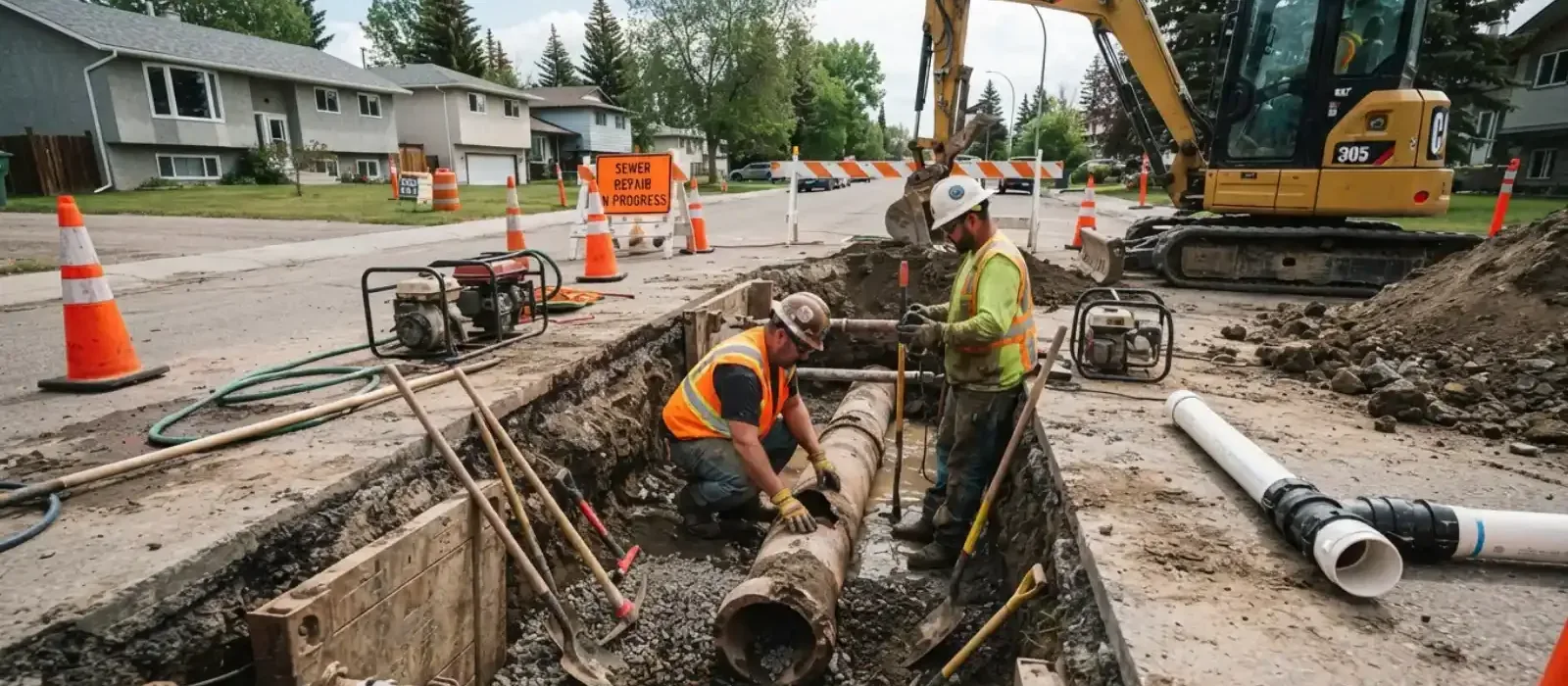
Crew excavating a street trench to repair a sewer line
Home › Blog › Trenchless Sewer Lining or Digging

Trenchless Sewer Lining or Digging It Up: Which Is Right for a Linden, NJ Home?

Neither method is better in every case. A camera inspection decides. Lining works when the old pipe is still in line and mostly intact. Digging is needed when the pipe is collapsed, badly sagging or has a broken section that must be replaced.

Get the camera look first, ask what the picture shows, and do not agree to either method on a guess. Replacement of sewer piping is not ordinary maintenance in New Jersey, so ask the code office about permits.

Why the camera comes before any decision

A sewer lateral is out of sight, so the only way to choose a repair is to look. A camera shows root intrusion, offset joints, cracks, scale, a bellied section and collapses. It also tells us how long the damaged stretch is and where it sits relative to the house and street.

Our sewer camera inspection records the run so you can see the same image we do. If someone proposes a trench or a liner without showing you the pipe, ask them to show it.

The three main approaches side by side

These are the common options for a failing lateral.

MethodHow it worksBest fitLimits
Cleaning onlyCable or water jet removes roots and buildup.Pipe is sound and the blockage is the problem.Roots return if the pipe is open or cracked.
Cured-in-place liningA resin liner is pulled into the cleaned pipe and cured.Cracks, small leaks and root entry at joints.Needs a clear, continuous pipe and does not fix a collapse.
Pipe burstingA new pipe is pulled through as the old one breaks apart.Pipe is failed but still in a straight path.Needs access pits and can disturb nearby lines.
Open trench replacement.The pipe is dug up and replaced.Collapse, major sag or broken pieces.Digs up yard, driveway or sidewalk.

When lining makes sense

Lining suits an old pipe that still runs in a straight path but leaks at joints or lets roots in. After cleaning, a liner makes a new smooth wall inside the old pipe. It avoids a long trench and limits damage to landscaping.

Lining is a rehabilitation of the existing pipe. It cannot restore a pipe that has lost its shape, and it slightly reduces the inside diameter, which matters on a small line.

When digging is the honest answer

We would rather tell you straight than line something that will fail again.

  • A collapsed section. The liner cannot pass through, and the break must be replaced.
  • A bellied section holding water. A liner follows the sag and the water stays.
  • A severe offset joint. The pipe parts and soil enters.
  • Crushed pipe under a driveway or heavy load. The structure needs replacing.
  • A connection that needs to be rebuilt. Some fittings cannot be lined.

A short dig to fix one failed section can be a better value than lining a long pipe that is otherwise sound. The camera and the length of the damage decide it.

Roots: the common reason people reach this decision

Roots enter through small cracks and joints, then grow into thick mats that catch paper and grease. Cutting them clears flow but does not seal the opening. If the pipe stays open, they return.

Lining seals those openings so roots lose their entry. Cleaning with a cable or our hydro jetting service is the step before lining, since the liner needs a clean surface.

What is different about sewer repair in Linden

The 2015 Union County Hazard Mitigation Plan for Linden says tree roots intrude into sewer lines and impede flow, and that storm drain backups in heavy rain flood some areas. For your decision, expect roots to be a leading suspect on any older lateral, and treat the camera as the way to separate roots from a deeper structural problem.

The Linden Roselle Sewerage Authority operates the wastewater treatment and interceptor facilities for Linden and Roselle. Whether your property line ends at the cleanout, the curb or the main depends on your address, so ask the Authority and the Linden Construction Code Department who owns which section before you hire a contractor.

County data from 2013 to 2017 shows about 59 percent of Linden units were built before 1960. A lateral from that era may be older clay or cast iron, which is a common candidate for lining or replacement. The camera will show the material.

Before any digging starts

Digging has its own rules and risks.

  1. Call 811. NJ One Call is free. The rule is notice at least 3 business days before excavation, with emergency work treated differently.
  2. Respect the marks. Hand dig within 2 feet of marked lines. Yellow marks mean gas.
  3. Ask about the permit. Replacement of sewer or drainage piping is not ordinary maintenance in N.J.A.C. 5:23-2.7. Ask the Linden Construction Code Department.
  4. Plan for the yard. Ask what will be restored and what will not be.

Questions that expose a weak quote

Ask to see the camera footage, the length and location of the damage, and which part of the line is yours. Ask how the contractor will handle a liner that must pass a bend or a reduced section.

Ask what warranty covers, what it excludes and who files the permit. A confident contractor answers each of these plainly. We can help with the repair side through sewer line repair once the camera has told us what is there.

What the work day looks like

For lining, the crew cleans the pipe, pulls the liner through from an access point, cures it and reopens the connections. A camera run afterward shows the finished surface. For digging, the crew exposes the damaged section, replaces it, bedding the new pipe properly, and backfills.

Either way, you should expect the water to be off in the building for part of the day and have some fixtures unavailable. Ask in advance what that means for your household, and what restoration of lawn, paving or landscaping is included.

Get the picture before the decision

Call us and we will schedule a camera look. The line is open 24/7, with same-day appointments when the schedule allows. We give a clear price before work starts, and we also serve Rahway and Clark.

Sources behind this answer

Where this guidance comes from: N.J.A.C. 5:23-2.7, the state plumbing standard, the Union County hazard mitigation plan on tree roots in sewer lines, and the Linden Roselle Sewerage Authority.

Common questions

It depends on the material, installation and the condition of the host pipe. Ask the installer for the manufacturer details and warranty terms in writing.

No. A liner follows the shape of the old pipe, so a sag that holds water stays a sag. That section needs replacement.

A properly installed liner seals the openings roots use, so regrowth into the pipe is much less likely. Roots can still press on the outside.

Many policies exclude wear, roots and gradual deterioration. Some offer a separate endorsement. Check your policy and ask your insurer.

Start with the Linden Roselle Sewerage Authority and the Linden Construction Code Department. Bring the camera footage so they can see where the problem sits.

Our service area around Linden

Dispatch covers Linden and the neighboring towns of Elizabeth, Rahway, Roselle, Clark and Cranford, all of which share a border with the city.

24/7 emergency line
Linden, NJ
Call now